Sunday, October 29, 2017

Fred Moore's 14 Points of Animation


"If a drawing looks clumsy, or lacks appeal, or no longer looks like the model, perhaps the animator is trying to show something that should not be shown.  

When Fred (Moore) was giving a talk on drawing Mickey, he was asked,  "How do you draw him looking right down on top of his head?"  Fred responded, "Why would you?"  If the appeal in the design was based on the balance of the ears to the nose and the relationship of the cheeks to the eyes and the head shape, Fred wondered why would you deliberately throw all that away?  

Why would you show a view that did not have much going for it as possible?  

- Frank Thomas, Ollie Johnston, The Illusion of Life   -  


"What happens is FACT.  TRUTH is what we think about. Write the truth."  - Robert McKee


People often like to cite the 12 Points of Animation as described in the Illusion of Life by Frank Thomas and Ollie Johnston. In this very same tome is their once senior animator, Fred Moore's 14 Points of Animation. 

Each has its own value and speaks for itself. But perhaps #6, 11-14 are the ones I'd like to point out when it comes to drawing.

 Fred Moore's 14 Points of Animation

1. Appeal in drawing

2.  Staging

3. Most interesting way?  (Why would anyone other than your mother like to see it?)

4. Is it the most entertaining way?

6. Are you advancing the character?

7.  is this the simplest statement of the main idea of the scene?

8.  is the story point clear?

9. Are the secondary actions working with the main action?

10. Is the presentation best for the medium?

11.  Does it have 2 dimensional clarity?

12.  Does it have 3 dimensional solidity?

13.  Does it have 4 dimensional drawing?  (Drag and follow through)

14.  Are you trying to do something that shouldn't be attempted?  (Like trying to show the top of Mickey's head)


There is another anecdote where the legendary Milt Kahl commented on dealing with "difficult drawings", "Why would you even draw it that way in the first place??" 

In the search of drawing what rings true about a subject....it's not about drawing what is literal about it, but rather, what is "true" about the subject.   "Truth", perhaps to be specific, "emotional truth"  is sometimes better served subjectively. 


Tuesday, October 24, 2017

GLENN VILPPU : The Drawing Master Returns to Tokyo again!


"Glenn Vilppu was the caliber level of work that we strove for." - Aaron Blaise, Veteran Disney animator/ director, artist. 


He has been teaching drawing in the animation industry for over 40 years. He's been called a legend. His teachings are part of the compilations notes of fellow Disney teacher, Walt Stanchfeld in Drawn to Life.   His original Drawing Manual is one the most coveted instructional art books in the world but sadly is the the most pirated globally. 

His name:  Glenn Vilppu.   


アニメーション業界でドローイングを教えて40年以上。彼はいまやレジェンドと呼ばれている。彼の教えは、同じくディズニーで講師を務めていたウォルト・スタンチフィールドがまとめた「Drawn to Life」にも掲載されている。彼が著した「Drawing Manual」は、アートの指南書として非常に人気を博したが、悲しいことに、世界中に海賊版が出回ることにもなっている。

彼の名は、グレン・ビルプ


He humbly just calls himself an drawing teacher, but Glenn is a master draftsman whose teachings has enabled countless students, artists and professional artist to have the skills and confidence to pursue their dreams.  


グレンは自身を単に「ドローイングの先生だ」と言う。しかし、グレンは巨匠のひとりでもあり、彼の教えによって育てられた生徒、アーティスト、業界のプロは数多く、グレンからの教えによって、技術と自信を持って夢を追いかけている。

Glenn has taught at some of the biggest animation studios in the world, Disney and Dreamworks and has taught globally, from  North America, Europe and Asia.   

グレンは、ディズニー、ドリームワークスをはじめ大手アニメーションスタジオで教えるほか、北米、ヨーロッパ、アジアなど世界各地で授業を行っている。


This coming December will be Glenn Vilppu's 4th seminar with Master Drawing Japan.  Additionally he is coming to Japan to christen the release of his NEW Drawing Manual which has been translated in to Japanese with Born Digital. 

来る12月、グレン・ビルプはMaster Drawing Japan主催のセミナーに来日。これは、4回目のセミナーになる。また新しいバージョンになった「ドローイングマニュアル」は(株)ボーンデジタルによって日本語版も出版されている。その記念の講義も同じく12月に開催の予定だ。


2月2日~3日:フィギュアドローイングマスタークラス:12時-6時(両日とも)


12月4日:グレン・ビルプ メソッド:6時~9時(講義の後にはサイン会も行われます)


12月9日~10日:構図マスタークラス:12時-6時(両日とも)


Ki CREATIVE STUDIO: BASICS - GESTURE: What's the Big Idea?


Tuesday, September 5, 2017

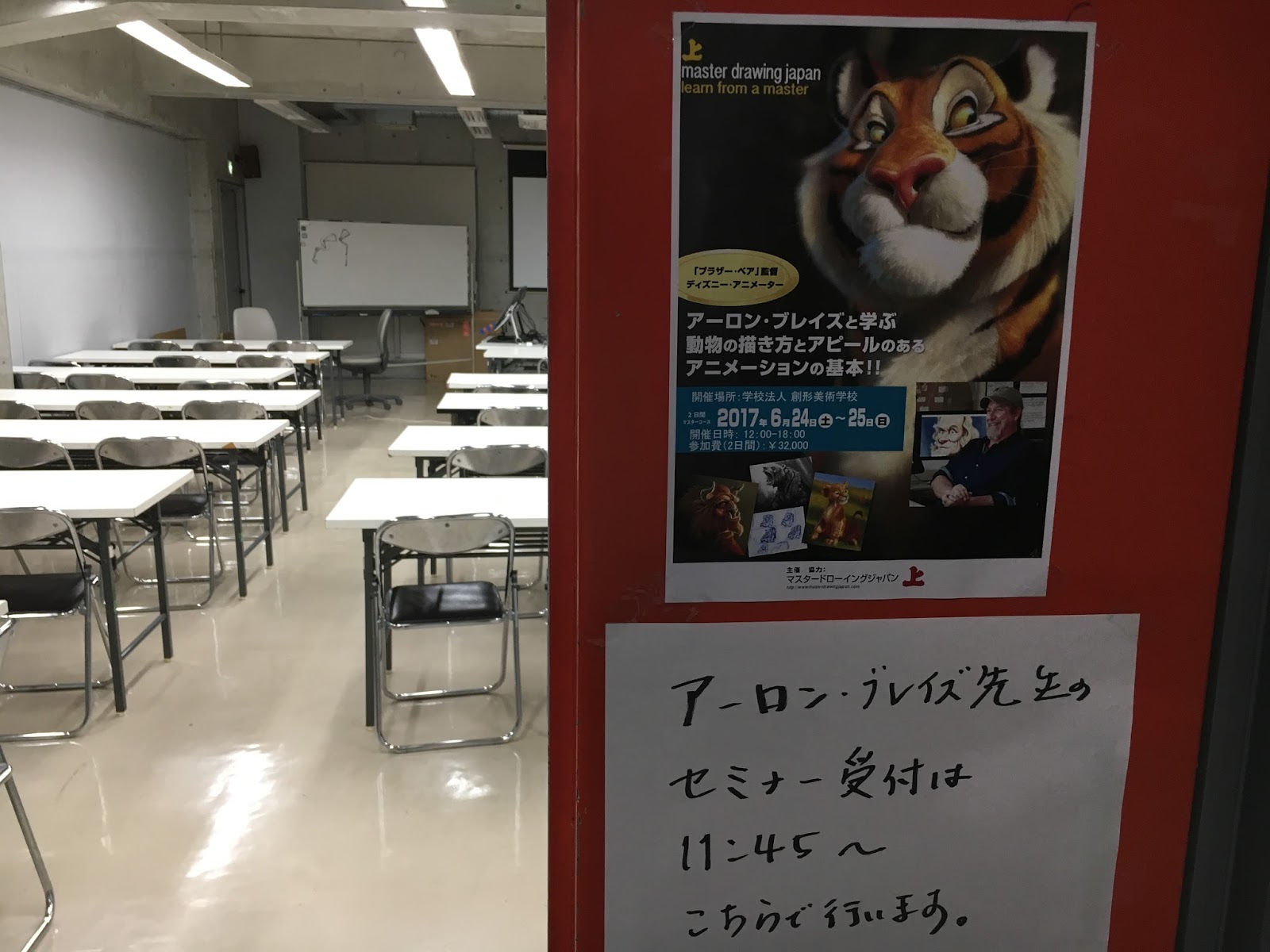
MASTER DRAWING JAPAN - Aaron Blaise's SUMO Sized Tokyo Seminar - Summer 2017


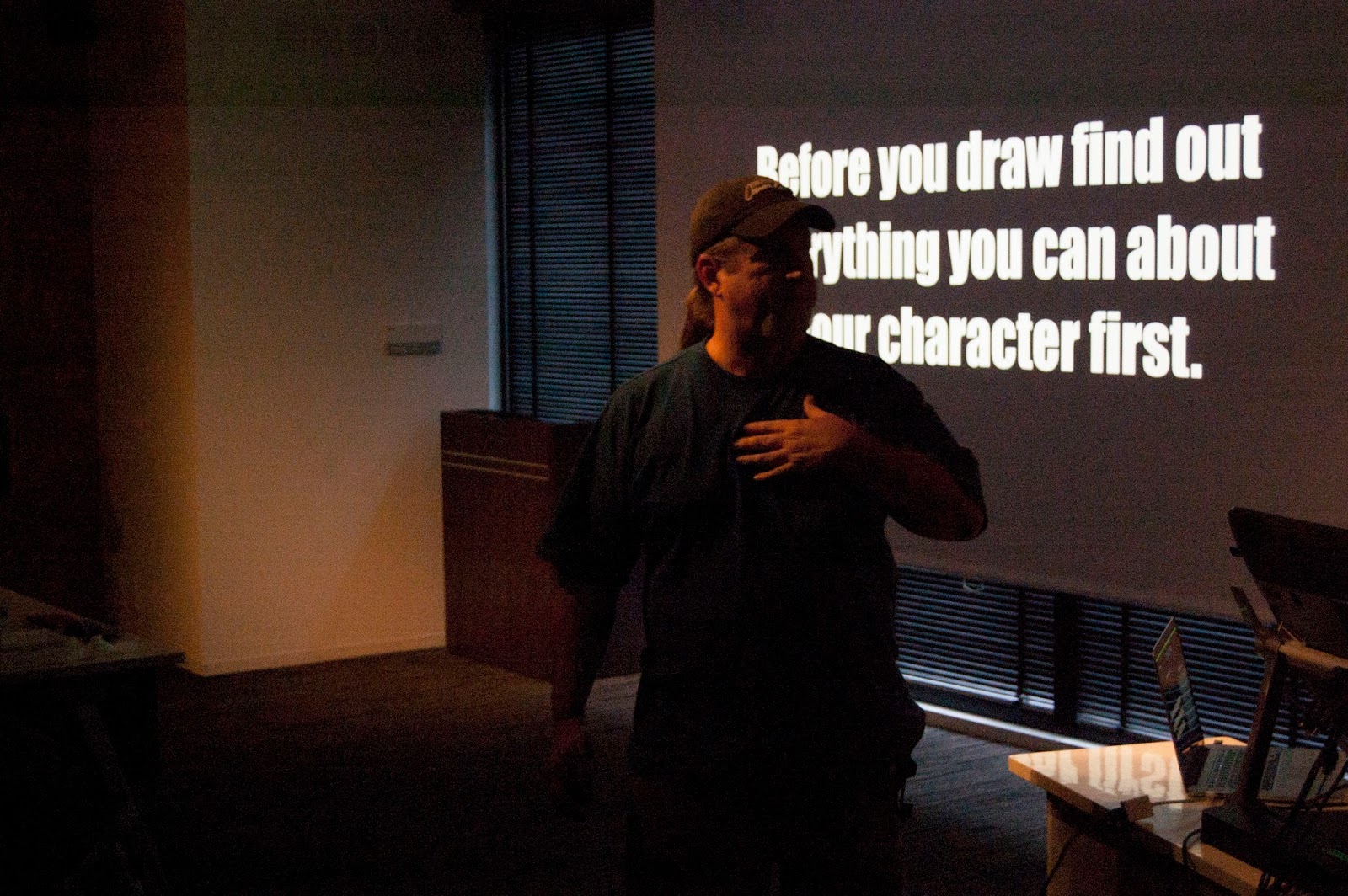
Apologies to everyone for not posting this sooner. Those who follow Master Drawing Japan are well aware that this summer, its biggest and most ambitious seminar to date was held.

Aaron Blaise, veteran Disney animator of over 20 years,  film director, illustrator and wildlife artist was our guest in Tokyo for an amazing 13 days!


In partnership with CG World / +ONE Knowledge, Master Drawing Japan invited this animation heavyweight to share his priceless knowledge with the aspiring artists of Tokyo.  During that time Aaron held two seminars on animation, creature design and an additional two intensive masterclasses on character design and human/ animal comparative anatomy.


Well over a hundred students and professionals came in attendance for Aaron's first teaching seminars in Japan.


Aaron covered all the essentials of animation and design.  A very interactive instructor, Aaron designed the lion above with direct guidance from the audience.


And Aaron went on to animate the lion as seen below.


For his next trick...! The Creature Design segment of the seminar , Aaron designed and completely rendered this amazing dragon from start to finish right before everyone's eyes.


Aaron graciously greeted everyone and left a lot of happy faces behind..


But this is only half of the story....

With still two more masterclass seminars to go, Aaron generously offered everyone interested to join him at an open drawing day at Tama Zoo


Aaron hailed Tama Zoo as one of the BEST zoo experiences he has ever had.  Coming from an animal illustration master  like Aaron, that's a huge compliment!


The last two days of Aaron's teaching tour ended at the Sokei Academy of Fine Arts with two masterclass seminars on character design and comparative anatomy.  Sokei has been a very generous sponsor of previous seminars for Master Drawing Japan.  Notably with one of Aaron's previous drawing instructors, the venerable Glenn Vilppu


It was an amazing experience and unforgettable adventure in art, design and illustration. Thank you Aaron, it was a great honor having you.  (P.S. Have to give s shout to Nick Burch - thank you too Nick! You were the rock that made sure that everything was steady!  You're a great guy!)    Looking forward to seeing you again!  


If you want to see more about Aaron's experience in Tokyo go to his YouTube channel: The Art of Aaron Blaise or look at Master Drawing Japan's blog on the experience!


Sunday, August 27, 2017

Feeling!


"What is the character thinking and why does he feel that way?"
- Ollie Johnston


"キャラクターは何を考え、なぜそう感じているのか?"
- オリー・ジョンストン


You might be asking, what's wrong with my drawing?  Why isn't there anything happening?  The anatomy is correct, I've rendered it completely, I have used perspective but why isn't alive?  The answer might be in the question above.

こんな疑問を持ったことがあるのではないでしょうか。自分のドローイングはどこが悪いんだろう?  どうもピンと来ないのはなぜだろう?  アナトミーは正しいし、陰影もしっかりつけたし、パースもちゃんとしている。それなのに、生き生きとしていない。
その答えは、オリーの言葉の中に見つけることができるはずです。


"A drawing that doesn't convey an emotion or a state of mind isn't a good drawing."  

"感情あるいは心の持ちようを表していないドローイングは、良いドローイングとは言えない"  


Make judgments about what you are putting down on paper.  Just don't copy.  We have cameras and digital photography for that. Your job as an artist is to convey a character.  Tell a story.  Your audience is paying you (with either money or time)  to show them what you, see. 

Don't be afraid to put what you feel in the drawing and even exaggerate what the character is doing. you can always "scale back" if you need to.


紙面に何を描くかを判断しましょう。写し取ろうとすることを止めましょう。映すのは、カメラやデジタル写真の仕事です。アーティストとして皆さんができることは、キャラクターを表現することです。ストーリーを語りましょう。観客は、皆さんの目を通したものを観るためにお金、あるいは時間を費やすのです。

思い切ってドローイングに自分自身の感情を込めましょう。そして、キャラクターの動作を誇張しましょう。そのほうが良いと思ったら、「縮小する」ことはいつでも可能です。


I have used scribbles and stick figures for clarity and simplicity. 

A.  Shows a person running, yes....but how does it compare to the attitude and feelings of B. and C.?

私は、明確化および単純化のためにスクリブル(落書きのようなライン)と棒人間を使っています。 
Aは走っている人です。それでは、BあるいはCの人と姿勢や感情をどう描き分ければ良いでしょうか?


Use abstract lines to capture the movement and push the feeling.  Think abstract.  Not literal!   

抽象的なラインで、動きをとらえ、感情をしっかりと表現しましょう。そしてそれを紙に描きとめるときには抽象化します。詳しい説明はしません。

Monday, July 31, 2017

Squash and Stretch(スクオッシュとストレッチ)


"血の通った生物なら、たとえどんなに骨ばっていようと、動いている間には、その形状が許す範囲の中でかなりの動きを示すものだ。"

- フランク・トーマス、オーリー・ジョンストン著『The Illusion of Life』(Disney Editions刊)


- スクウォッシュ・アンド・ストレッチは、アニメーションだけの概念ではない。

原始人が人物を描いた時から存在していたし、古典の巨匠たちの絵にも見ることができる。


- ゴムのように自在に形を変えるアニメーションのような、大げさな表現は必要ないが、
ドローイングにエッセンスを取り入れることはできる。


-  誇張にも使えるし、人物の輪郭の明確化にも利用できる。 


- あるいは、人体にかかるフォースの方向を明確するためにも利用できる。


-  スクウォッシュ・アンド・ストレッチは、明確化を助けてくれる。ダイナミックでドラマチックなアクションをいっそう際立たせてくれる。


Good Old Squash and Stretch


"Anything composed of living flesh, not matter how bony, will show considerable movement within its shape in progressing through an action."

- Frank Thomas, Ollie Johnston,  The Illusion of Life


- Squash and stretch is not purely an animation concept. It has existed since primitive man was able to draw figures.  It has been used by the old masters.

- We don't have to go into gross caricature seen in rubbery animation but it can inform the spirit of our drawings.  


-  Some use it for exaggeration. It also can be used for clarity in the contour of the figure.  

- It can also clarify the direction of forces in the figure. 


-  It aids clarity.  It emphasizes dynamic and dramatic action!