Friday, May 4, 2018

Draw FORCES Not FORMS.


In 1937 Don Graham,  one of the most instrumental teachers at the Disney studio somewhat criticized artists of drawing and animating FORMS instead of FORCES.   In contrast, he praised animator, Bill Tytla of being the only artist at the studio who consistently drew forces in his work.  

1937年のこと、ディズニースタジオでも最も優れた指導者のひとりドン・グレアム(Don Graham)は、「フォース」ではなく「フォーム」から描き、アニメーションするアーティストたちをたしなめていました。これと対照的に、作品に「フォース」を描くただ一人のアーティストだったビル・ティトラ(Bill Tytla)を称賛しました。

"...there is a constant use of graphic accents in his (Tytla's) manipulation (animation) , and these accents may be used as possible symbols of forces. The actual form is something which eventually is necessary but which is really a by-product of animation.  The vital element is force.  

「ティトラは、アニメーションにグラフィックアクセントを常に取り入れている。フォースのシンボルとして使用されているのだ。もちろん最終的にはフォームは必要になるのだが、アニメーションでは副次的だ。最も重要なのは、フォースだ。

What does this concept lead to. (?) As soon as the forces are under control, it is possible to create feelings or emotions or reactions in the audience."    - Don Graham 

このコンセプトは何を意味しているのだろうか? フォースをコントロールできるようになれば、鑑賞者の感じ方、感情、反応を自在に作り出せるのだ。-ドン・グレアム(Don Graham)


There is a saying, "The artist draws not the 'thing' but the forces that have created it."

「アーティストは、「物」ではなく、その根源にある「フォース」を描く」とはよく言われることです。

How many times have you been drawing and the form you have created seems to be dead and lifeless on arrival?  Proportions are correct, anatomy is correct, your choice of line is clean or clear but it is lifeless like a "paper doll cut-out".  

描いたものから生気が感じられない、と思った経験は数え切れないのではないでしょうか。プロポーションは正しく、アナトミーもおかしくはない。引いたラインはクリーンでクリア。ところが、まるで紙人形のように生気がない。


The cause might be because you failed to include the forces acting upon the subject.

その原因は、対象に働いている「フォース」を描いていないことです。

Forces are vital to creating a sense of life, energy and vitality in a drawing.  I believe capturing the forces are essential if you want your drawing to have a sense of movement.

ドローイングに生命感、エネルギ、躍動感をもたらしてくれるのが「フォース」です。動きを表現したいなら、フォースをとらえることが肝心だと思っています。

Some might dismiss this as "animation concepts" .  Truth is,  ALL drawing of the figure is a form of animation.    Movement, thoughts and feelings are all part of what we as artists are trying to convey to our audience.

これは「アニメーションの考え方だ」と見向きもしない人もいるでしょう。しかし、人物を描いた作品はすべて、アニメーションの一種だと考えることができます。動き、考え、感情はどれも、アーティストが鑑賞者に伝えたいことです。

The sketches below from the animator, Bill Tytla are good examples.  Please don't get distracted by the use of caricature.

ビル・ティトラ(Bill Tytla)による以下のスケッチは、このことをよく示しています。カリカチュアに惑わされないでください。


I used the red lines to indicate where the weight was either pushing in to or away from gravity.  Though the figures are not moving the sensation of movement exists.  If you ignored the facial expressions the sense of what they are feeling exist.  


内向き、外向きの力、重力に反発する力が働いているところに赤線を引いて示しています。キャラクターが動いているわけではなくとも、動きは伝わっています。顔の表情を見なくても、どんな感情を抱いているかは伝わってきます。


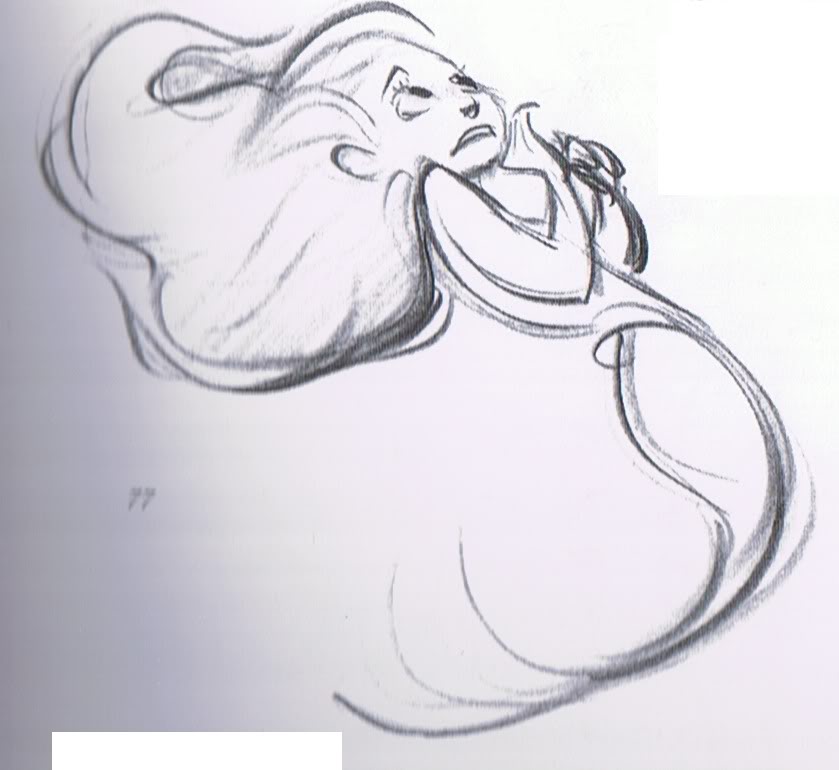
Glen Keane.

グレン・キーン

In Glen Keane's Little Mermaid, it's very easy to read in her flowing body what forces are working upon the character and even how she is feeling.

グレン・キーンによるリトル・マーメイドでは、まるで流体のような彼女の身体から、どのようなフォースがそこに働いているかが、容易に読み取れる。その時の彼女の感情も伝わってくる。

 1) Notice how your eyes "glide" around the character as opposed to falling to a dead stop.
 2) Notice how you feel the pushes and tension in her body.

1) 観る人の目は、キャラクターの周囲を滑らかに動く。どこかに行きついてとどまるようなことはない。

2) 押し込む力、引っ張る力が働いている部分を見ると、鑑賞者は何かを感じる。

These are the tools that create the feeling of life and real movement. Not the anatomy, not the cute faces.

これらは、鑑賞者に、生命や現実味のある動きを感じさせるためのツールです。アナトミーやかわいらしい顔では、生命や動きを感じさせることはできません。


Frank Frazetta.

フランク・フラゼッタ

Frazetta's works always have a sense of life and power behind them.  In his rough sketches it's really his shorthand that sells the pose.  We don't have to make super polished works to convey the energy and impact. 

フラゼッタの作品からは常に、生命感とパワーが感じられる。ラフスケッチを見ると、ポーズを魅力的に見せているのは、彼の簡略化された表現であることが分かる。エネルギーとインパクトを強めるためには、作品を入念に仕上げることが必要なわけではないのだ。


In this ruff sketch of an arm at the top we see simply an arm with it's anatomy.  But below we can see the graphic accents which show the relation of the forces in the arm.

このラフスケッチはどちらも腕だ。上は、アナトミーを意識した腕。下は、腕に働くフォースの関係性を表したグラフィックアクセントだ。

In terms of how this can relate to the human body we can see the how the forces push out defining the contours of the body.  

これを人体に関連付けて考えるには、人体の輪郭を外向きに押しているフォースに注目すると分かりやすい。


Below is an example of my sketching process of the graphic above. 

上に掲載したドローイングのプロセスを動画でご覧ください。


Tuesday, March 20, 2018

KI Creative Studio Drawing Workshop 1 Year Anniversary!

Thank you everyone!! Last night marked Ki Creative Studio's 1st Anniversary!  A YEAR has passed!  Over 12 drawing Tokyo workshops to offer people a chance to become better artists! Looking forward to another year!!  See you at the NEXT KI CREATIVE STUDIO WORKSHOP!!


Friday, March 2, 2018

Joe Ranft's 9 Rules for EFFECTIVE STORYTELLING - ジョー・ランフトによる効果的なストーリーテリングのための9つの原則


STAGING: The positioning of characters in a scene for maximum emotional content and clear readability of actions  - Eric Goldberg, Animator (Character Animation, Crash Course)

ステージング:感情面の文脈とアクションを明確に読み取れるように、あるシーンでのキャラクターたちの配置を決めること。-エリック・ゴールドバーグ、アニメーター


Joe Ranft was an acclaimed storyboard artist who worked at both Pixar as well as Disney Animation studios.

ジョー・ランフト氏は、ピクサー、ディズニーアニメーションスタジオに所属していた、著名なストーリーボードアーティストです。

He is most famous for his work on Toy Story and Cars.

代表作は「トイ・ストーリー」「カーズ」など。 


Joe taught a class at CalArts in 1987 where he outlined rules for storyboarding.

ジョーは、カルアーツで教えていた1987年に、ストーリーボードを作成する際の指針を示しました。

I believe these rules apply to figure drawing or gesture drawing as we (are not just drawing a figure but we are conveying an IDEA.  We have to think beyond just drawing anatomy, limbs, with proper proportion and appealing lines - what are the combination of these elements are trying to express when put together??


この原則は、人体ドローイング、ジェスチャードローイングにも応用できます。私たちが目指すのは、単に人体を描くことではなく「アイデア」を伝えることです。アナトミー、身体のパーツ、プロポーション、魅力的なラインに加えて、これらすべてを組み合わせて「何を表現するか」を考える必要があるのです。


When I refer to an idea, we have to consider that what is happening on the page has some sort of beginning, middle and an end.  Something was happening before the figure moved,  the current action of the figure and the end result of the figure that we anticipate the figure to fall into.

「アイデア」という言葉で言いたいのは、紙の上に表現したものに「始まり、中間、終わり」があるということです。人物が動く前には何かが起き、現在のアクションがあり、その次にどう落ち着くかを予感させます。

All this has to be visualized as we put the figure to the paper if we want to be storytellers.

ストーリーを語るには、人体を描くときに、これを目に見える形で示します。

Be a storyteller!  Not a copy machine!

ストーリーテラーになりましょう。コピー機ではなく!!

Please consider Joe's rules below.  Hopefully it will inform our drawings and make the world better for everyone:

以下がジョーの原則です。皆さんのドローイングに役立つものであることを願います。

1) Show rather than tell.
語るのではなく、見せる

2) Communicate one idea at at time.
1度に1つのアイデア

3) Stage it so that the audience sees it clearly.
観客が明確に理解できるようにステージングする

4)  Clarity in the shot’s composition
ショットの構図を明確にする

5) Clarity in the staging or pantomime
ステージング、パントマイムを明確にする  


6) The story drawing’s job is to communicate an idea, feeling/ emotion an action.
ストーリーを描く仕事ととは、アイデア、感情、雰囲気、アクションを伝える仕事である

7) Imply animation in your drawings (through caricature, use of animation principles, i.e., stretch and squash , exaggeration, etc.)
ドローイングに生命を込める-そのためにはカリカチュア化する、アニメーションの原則(ストレッチ&スクウォッシュ、誇張など)を使う

8)  Imagine ourselves in our character’s shoes/place
キャラクターの立場に立って考える

9)  Leave an impression, an impact (visual and emotional) that affects the viewer
鑑賞者にビジュアルまたは感情面の印象、インパクトを与える


These are rules that should be framed in gold, but I think Rules 7, 8, and 9 are the most essential to a drawing that tells a story.

この9つの原則はすべて、額に飾っておくべき大切なものです。特に、7、8、9はストーリーを語る絵を描くことと密接に関係していると思っています。


Below are some of my suggested masters who demonstrate their own examples of these principles:
(Since the upcoming Ki Creative Studio Vol. 13 - 1st anniversary! Will feature our famous posing pair we did our best to give examples using two characters)

以下は、この原則が生きている巨匠たちの作品例です。
(次回のKi Creative Studio Vol. 13は、1周年記念です! これまでのドローイングの会で素晴らしいポーズをとってくれた女性2人をモデルに、2人組のポーズを描きます)


Edgar Degas -Waiting


Illya Repin - Refusing Confession


Norman Rockwell


Ryan Lang - Big Hero Six


Bill Peet - Lady and the Tramp


Milt Kahl - The Rescuers


Cory Loftis


Heinrich Kley